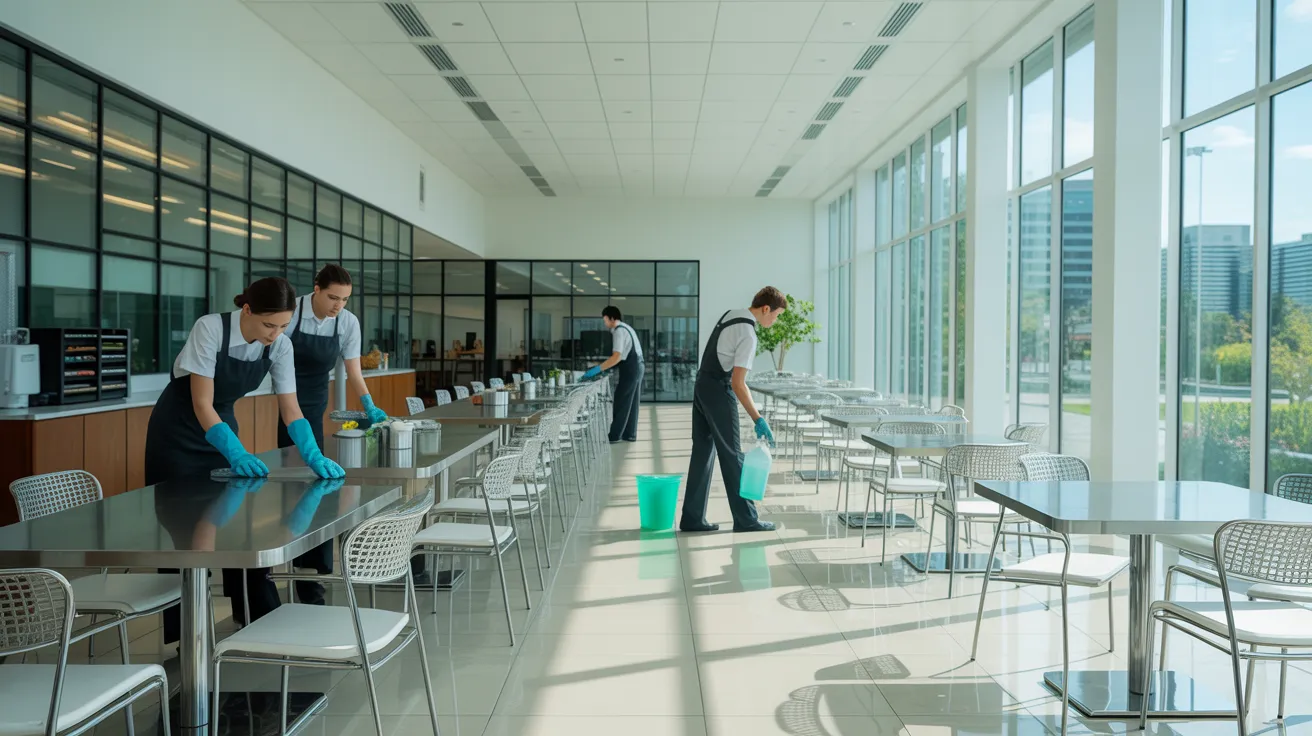
Commercial hygiene experts located in Brampton help maintain restaurants, commissaries, baking enterprises, warehouses, and mobile food units in compliance. They disinfect frequently handled areas, food prep surfaces, equipment, floors, drains, restrooms, and preparation zones with certified chemicals, at proper strength, and with verified times.
Key Takeaways
- Brampton's food safety cleaning experts provide services to restaurants, grocery departments, commissaries, warehouses, bakeries, schools, mobile vendors, and allergen-sensitive operations.
- Frequently contacted areas, food-contact equipment, kitchens, floors, drains, restrooms, and storage areas are sanitized using area-specific procedures to prevent cross-contamination.
- Recording of conclusion through swabs, reviews, and correction logs validates trained contractors have checked approved sanitizer dilution, compatibility, and exposure duration.
- Sound hygiene calendars account for hazard, output capacity, transitions, accidents, and requirements when distributing routine, periodic, and seasonal tasks by area.
- Insurance, color-coded implements, HACCP, sanitation expertise, safety training instruction, references, and inspection-ready sanitation paperwork are vital contractor characteristics.
Brampton Establishments That Need Food Safety Cleaning: Which Ones?
Any Brampton facility that handles, stores, prepares, packages, or serves food needs hygiene cleaning. You must follow it if your operation falls under health inspection, premises standards, or HACCP protocols. That requirement covers restaurants, cafeterias, commissaries, grocery food departments, butcher shops, seafood counters, convenience stores, and institutional kitchens.
Compliant food safety cleaning remains required in storage facilities, production centers, refrigerated warehouses, bakeries, school nutrition services, event spaces, and delivery hubs. Seasonal and mobile businesses matter as well, like mobile kitchens, market vendors, and seasonal booths. Your establishment needs written cleaning standards when your team work with ingredients, section ready-to-serve foods, heat finished items, or maintain allergen storage. In Brampton, cleanliness is not elective; it represents lawful, operational, and customer protection standards.
What Services Do Brampton Cleaning Experts Provide?
Your facility requires professional cleaners who disinfect frequently contacted surfaces, kitchens, all floor types, and toilet facilities for food safety and health code adherence. These zones receive attention due to their elevated cross-contamination potential, trip and slip dangers, and violations of hygiene standards.
When you know their cleaning scope, you can ensure your operation's cleaning procedures satisfy operational and regulatory requirements.
Essential High-Touch Surface Sanitizing
set how frequently each area is sterilized
product directions and relevant health codes to copyright effectiveness. Staff can employ swab testing to check sterilization efficacy
Kitchen Areas, Floor Surfaces, and Bathroom Spaces
Brampton cleaning services zero in on kitchens, floors, and restrooms as each zone involves different food safety, slip-and-fall, and wellness concerns. In industrial kitchens, you need degreasing on cook lines, equipment exteriors, drains, prep surfaces, and splash zones to reduce contamination and pest pressure.
Floor care that is recorded should also be anticipated. Technicians clean and remove buildup from grout, tile, and vinyl flooring, then apply correct drying techniques so you can limit falls and meet regulatory standards. They also handle entry points where dampness and dirt enter the building.
Restroom cleaning requires decontaminating touch areas, bathroom equipment, stall barriers, supply stations, and bins, replacing items and managing smells. They also service restaurant moprooms, where chemical storage, sink hygiene, and drainage conditions can affect sanitation compliance and staff safety daily.
The Importance of Food Safety Cleaning in Brampton
Brampton businesses need to establish proper sanitation practices for satisfying health code requirements and passing inspections. You also minimize cross-contamination by cleaning and sanitizing food-contact surfaces, equipment, and high-touch areas correctly. Most importantly, you safeguard public health by lowering the risk of foodborne illness in your facility.
Sanitary Standards Adherence
Brampton food operations must comply with stringent health requirements, so sanitation practices is essential to fulfilling health codes, safeguarding customers, and avoiding penalties. You must maintain sanitary food-contact surfaces, written maintenance records, correct sanitizer application, and traceable training practices that align with municipal and provincial inspection expectations.
Detailed hygiene logs assist you in demonstrating due diligence during inspection audits and demonstrating your practices follow standardized patterns that are repeatable and overseen.
Contamination Control
Following regulatory requirements depends on your ability to prevent cross-contamination in daily food handling and cleaning. You should isolate raw items from prepared foods, sanitize prep surfaces between tasks, and maintain separation of cleaning products from food. Well-defined guidelines decrease contamination chances and support consistent compliance during inspections.
You could implement allergen segregation to prevent priority allergens from contacting shared surfaces, containers, or equipment. Apply separate boards, color-marked equipment, and strict utensil labeling so team members avoid blending products during preparation or service. Mandate handwashing after handling raw meat, seafood, eggs, or allergen-containing products. Change wiping cloths regularly, and test disinfectant concentration using strips. When employees learn these procedures each shift, you create a cleaner, insightful guide safer operation that matches Brampton's safety requirements daily.
Public Health Protection
Should food safety cleaning collapse, you don't simply risk a failed inspection—you expand the odds of foodborne illness harming customers, staff, and the wider Brampton population. You also undermine your responsibility in safeguarding community wellness, especially in high-traffic food premises where pathogens travel quickly through surfaces, equipment, and touchpoints.
You need cleaning protocols that eliminate contaminants, sanitize correctly, and verify results. That requires adhering to exposure periods, using approved disinfectants, recording cleaning times, and educating employees to meet regulatory standards. These controls support disease prevention by lowering microbial loads before they contaminate surfaces or food. In Brampton, strong sanitation protects vulnerable populations, prevents disease spread, and enables you to show proper care. When you maintain proper standards, you don't just meet regulations—you substantially decrease danger and promote secure food handling citywide.
How Does Cleaning Support Food Safety Compliance?
Committing to strict sanitation practices underpins food safety compliance by minimizing contamination hazards, preventing pathogen multiplication, and ensuring your facility complies with sanitation requirements under HACCP-based programs and public health regulations. You validate that product-contact areas are visibly clean and microbiologically controlled, enabling documented preventive controls and inspection readiness.
Effective cleaning also strengthens allergen management by clearing residues that can lead to undeclared allergen exposure. by clearing residues that can provoke undeclared allergen exposure.
How Do You Plan Commercial Cleaning Services?
Plans for cleaning work most effectively when developed based on risk assessment, output volume, and compliance standards instead of just a predetermined calendar.
Schedule cleaning before and following promotional, catering, or public functions, or gatherings for successful event turnarounds.
Finding Quality Brampton Cleaning Experts: A Guide
Evaluate providers first by sanitation compliance standards rather than cost. You must ensure each provider understands CFIA, public health, and HACCP-aligned expectations for your business. Request proof of insurance, WHMIS compliance, staff training documentation, and supervision methods. Check technician understanding of contamination prevention, chemical handling, and documented sanitation practices.
Additionally, you need to evaluate service dependability and responsibility. Obtain references from Brampton food operations, then review service speed, corrective-action procedures, and communication standards. Verify the company supports supplier audits and can deliver inspection-ready documentation when inspectors or external parties need proof. Verify equipment upkeep, colour-coded tools are applied correctly, and location-specific dangers are identified. A qualified provider protects compliance, product integrity, and your brand reputation.
What does a Food Safety Cleaning Plan consist of?
Create a written plan that clearly outlines every sanitation duty, guideline, and expectation prior to beginning production. You should list cleaning frequencies, approved chemicals, dilution rates, contact times, tools, and verification methods for each zone, surface, and piece of equipment. Be sure to include pre-operational inspections, corrective actions, and employee training requirements.
Your program should also cover contamination prevention, garbage management, pest control procedures, and recorded timelines for bathrooms, drainage systems, surfaces, and food-preparation zones. Detail how you'll separate raw and ready-to-eat processes, support ingredient tracking, and maintain accurate allergen labeling through validated cleaning between product changes. You should assign accountability, maintain signed records, and compare results against regulatory standards, HACCP controls, and customer requirements. When gaps appear, revise procedures immediately and retrain staff.
Regular Asked Questions
Will sanitation providers handle overnight shifts at Brampton properties?
If you run regulated facilities, you'll also require documentation that enable audits and maintain assurance.
Do sanitation professionals provide emergency spill response services?
Yes, you can locate several Brampton cleaning professionals offering emergency response options. They handle contamination, evaluate risks, isolate zones, and perform swift decontamination to minimize risk and prevent disruption. You should confirm timeframes, training credentials, protocols, and procedures. If your facility must meet standards, pick a provider that logs events, follows procedures, and ensures verification.
Can eco-friendly disinfectants be utilized safely on food preparation areas?
Absolutely, eco-friendly disinfectants are suitable for food preparation areas when you choose items marked food-safe and complying with regulations. You must verify contact times, mixing proportions, and rinsing needs in advance of use. Natural-based solutions reduce toxic chemical contact, though you require demonstration of efficacy against target microorganisms. For keeping surfaces residue-free, follow exact manufacturer guidelines and validate your disinfectant meets food industry regulations.
Do sanitation programs enable seasonal variations?
Yes, you can modify sanitation programs for production fluctuations. You should adapt timing, personnel, sanitizers, and verification steps to correspond to seasonal workflows while upholding compliance standards. You'll reduce operational delays by organizing sanitization around line changes, high demand periods, and equipment use patterns. You should further modify written procedures, employee training, and environmental monitoring to account for transient threats, additional allergens, or increased soil loads. Continuous reviews keep your schedule current.
Will professional cleaning services teach your staff on sanitation best practices?
Indeed, commercial cleaning providers typically provide staff training on sanitation best practices. Your team receives instruction on safe chemical application, contact times, cross-contamination prevention, equipment breakdown, and record-keeping. They typically follow instruction with HACCP, GMP, and CFIA or regional health standards criteria. Many also execute sanitation audits to confirm standards, identify gaps, and strengthen improvement measures. This supports you in establish reliable processes, pass inspections, and decrease foodborne illness risks each day.
Summary
Partnering with Brampton commercial cleaning and food safety experts goes beyond tidying—it ensures your facility meets inspection standards and your standards remain compliant. From processing facilities to kitchens, each sanitized surface and organized section lessens contamination risk and prevents major expenses. By scheduling maintenance at suitable frequencies and implementing a thorough cleaning program, you protect staff, your customers, and your reputation. In a tightly controlled market, clean environments are non-negotiable—they're critical to business success.